Every spring, poppies turn the Luberon and the Valensole Plateau into living paintings. Here’s why they thrive here, when to see them, and how to enjoy them without harming the fields.
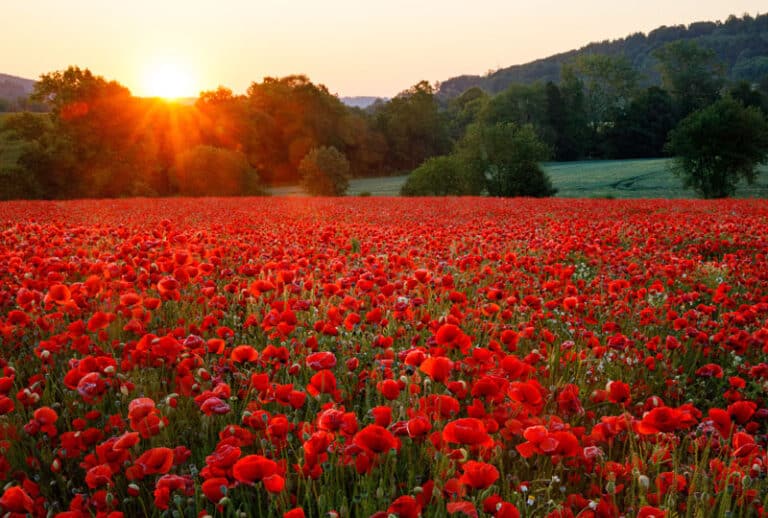
There are spring mornings in Provence when the landscape looks like someone spilled watercolor on purpose: cool hills, that warm earthy scent, and then… red. Not a shy red. A bold, electric red that pops along field edges, in furrows, between young cereal shoots. In the Luberon and out toward Valensole, the poppy isn’t just a flower, it’s a sign. A little seasonal wink that says: “Yep. It’s happening. Right now.”
A flower that loves big open farmland
Poppies are basically best friends with cultivated fields. They thrive in wide open spaces and in soils that follow the agricultural rhythm: sowing, sprouting, resting, rotating.
Around the Luberon and on the Valensole Plateau, you cross plenty of large-scale farmland (especially cereal crops), which is prime poppy territory. The bigger the fields, the more dramatic the “red carpet” effect can feel.
Spring weather can change everything
Here’s the Provence truth: one year never copies the next. A wetter winter or early spring followed by bright, sunny stretches can trigger a spectacular bloom. But if it dries out too early, the show can end fast.
That’s exactly why poppies feel so special: they’re fleeting, unpredictable, and honestly… irresistible. You can’t schedule them. You watch for them.
Why the Luberon and Valensole look “redder” than elsewhere
Because they often hit the perfect combo:
- wide fields that read like one big continuous canvas
- field edges and farm tracks where poppies are easier to spot
- strong, clean light that makes the red insanely photogenic
- scenic roads where your eyes can catch those flashes of color from far away
It’s landscape magic as much as botany. Poppies might grow in many places, but here, they perform.
When to see them
In Provence, the sweet spot is usually late March through mid-May, with a peak often in April (depending on the year and altitude).
For photos: go early morning or late afternoon, when the light is soft and the reds don’t blow out.
Insider tip
Poppies are often at their best:
- along the edges of fields, where they catch the most light
- near farm paths, without stepping into the crops
- after a few stable days (not too windy, not too rainy)
Quick reminder: fields are private property and real workplaces. The best way to enjoy the view is to stay on the roadside, avoid trampling, and only pull over where it’s safe and you’re not blocking traffic.
A short-season experience (and totally worth it)
Want to catch Provence at its most alive? Come enjoy a private spring day built around what’s blooming right now, with handpicked photo stops, beautiful back roads, and that slow, easy pace that makes the whole thing feel like a movie.
Book your experience